Have a go.
Playing and exploring
Investigating what happens and trying something unfamiliar. Exploring a new texture or finding another way to use a familiar toy can be the start of a discovery.
OUR CURRICULUM · 3 MONTHS TO 5 YEARS
A familiar song. A question during a story. A tower that needs rebuilding. Childhood is full of opportunities to discover something new.
At Cedar Grove, we bring together care, conversation and learning through play, following the Early Years Foundation Stage. We encourage curiosity and growing confidence, with support that reflects each child’s development.
THE EARLY YEARS FOUNDATION STAGE
The Early Years Foundation Stage (EYFS) is England’s framework for children’s learning, development and care from birth to five.
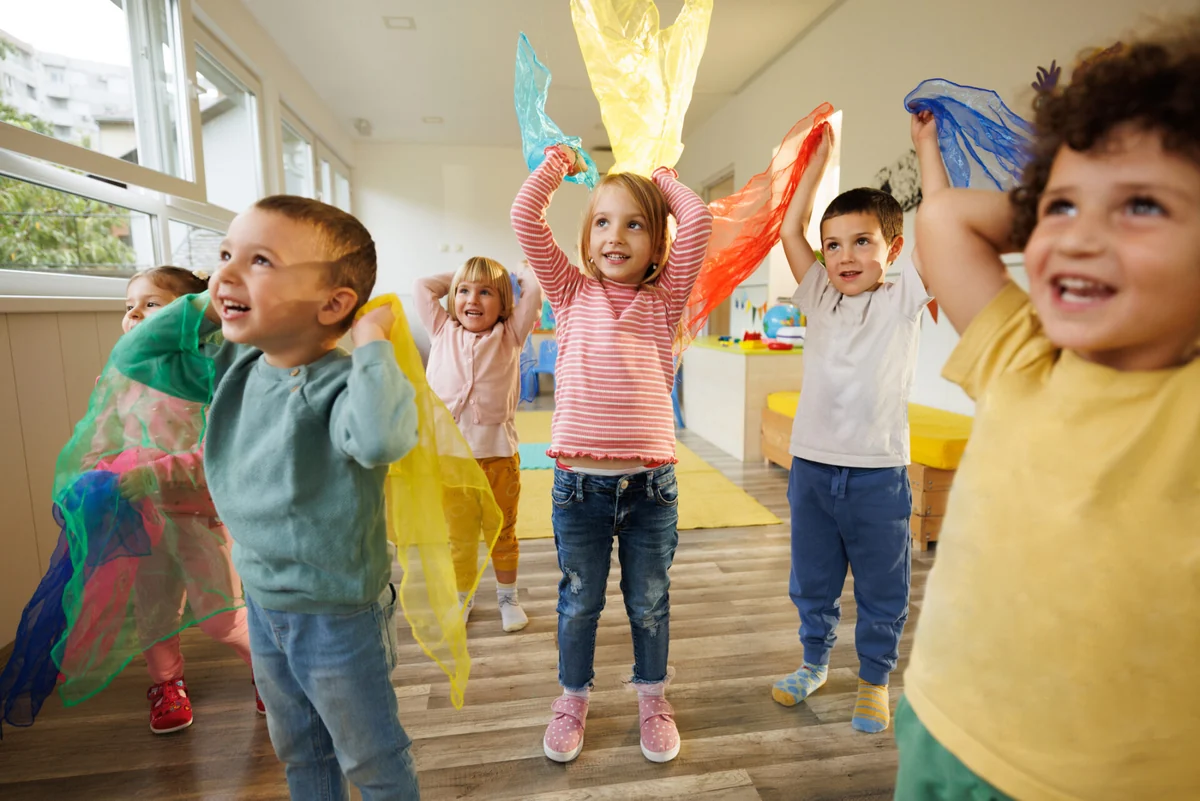
All seven areas matter, and they connect through everyday play. The examples here offer a glimpse of how children can learn as they explore, create and spend time together.
More about the EYFS on GOV.UK (opens in a new tab)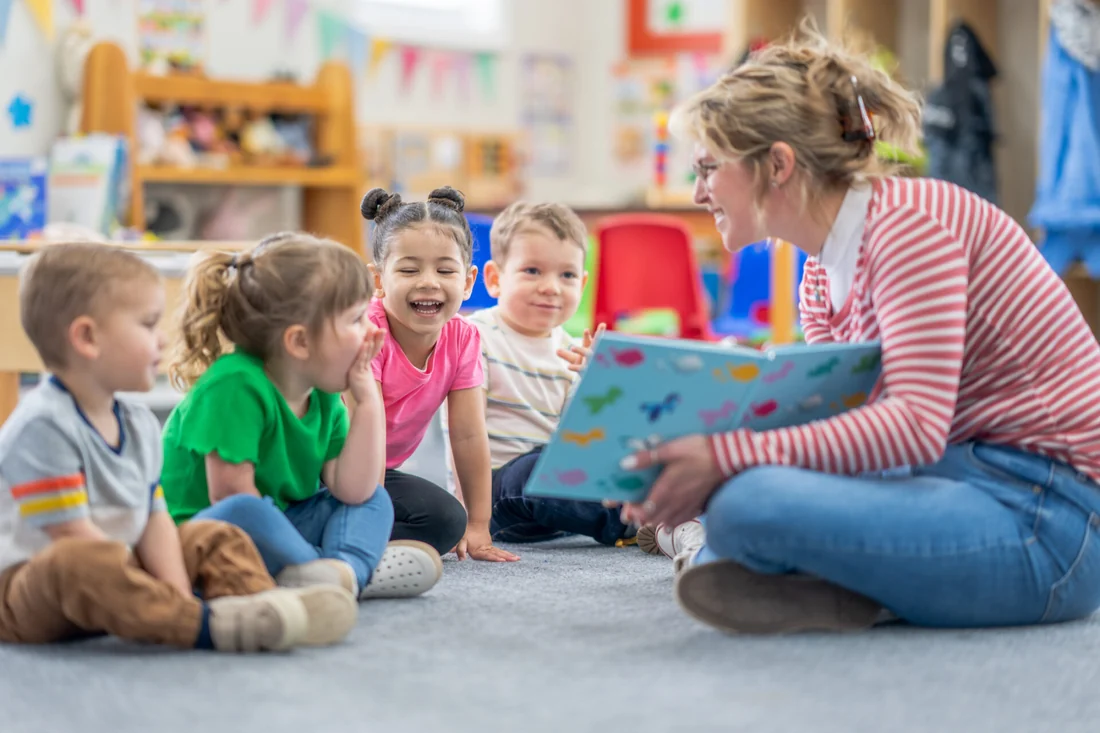
From a baby’s gestures to a preschooler explaining an idea, communication grows through attentive exchanges. Songs, stories and conversations introduce new words and give children time to listen and express themselves.
Reaching, balancing and handling objects help children build strength and coordination. Play can involve large movements outdoors or smaller ones, such as stacking blocks, turning pages and using tools to make marks.
Feeling secure with others helps children explore their feelings and relationships. Shared play and stories offer chances to name emotions, understand another person’s perspective and practise taking turns, with an adult’s support.
Enjoying books and understanding stories are part of the journey towards reading and writing. Rhymes, talking about pictures and making meaningful marks help children discover that sounds, pictures and written words carry meaning.
Comparing two towers, fitting shapes together or counting toy animals can all spark mathematical thinking. Children explore quantity, size, patterns and position while talking about what they notice.
Children make sense of the people, places and living things around them. Looking closely at plants, talking about family experiences and sharing books about different communities can build knowledge, vocabulary and respect for others.
Music, movement, pretend play and experimenting with materials give children ways to express their ideas. A box might become a bus; paint might tell a story. Exploring possibilities matters as much as the finished creation.
HOW CHILDREN LEARN
The EYFS describes three characteristics of effective teaching and learning. These are the ways children approach a new experience, explore an idea and keep discovering.
Playing and exploring
Investigating what happens and trying something unfamiliar. Exploring a new texture or finding another way to use a familiar toy can be the start of a discovery.
Active learning
Becoming absorbed, continuing when something is tricky and enjoying a sense of achievement. Rebuilding a fallen tower can be a small lesson in persistence.
Creating and thinking critically
Developing ideas, making connections and trying different approaches. Which blocks might make a stronger bridge? Children can test an idea, then change their plan.
INTENT · IMPLEMENTATION · IMPACT
We want every child to feel secure, communicate in their own way, become increasingly independent and enjoy discovering how things work. Our curriculum connects the seven EYFS areas with meaningful experiences, building on each child’s starting point, family life, interests and needs.
Practitioners combine caring routines, child-initiated play and carefully chosen adult-supported experiences. They model language and skills, make resources accessible, repeat familiar experiences and offer achievable next steps. Indoor and outdoor learning gives children different ways to explore the same ideas.
We look for growing confidence, involvement, relationships, communication and skills that children use in new situations. Progress is considered over time and in context, through everyday observations and conversations with families. What we notice informs what we offer next, including additional support where needed.
We notice what a child is trying to do, listen to their words or gestures and consider what they already know. We respond with a useful word, a resource, time to repeat, or a manageable challenge. We then revisit the experience to see what has changed, rather than treating one activity as a finished lesson.
We adapt language, resources, routines and the environment to help children take part. Home languages, cultures, interests and different ways of communicating are valued. Families help us understand what works, and we work with relevant professionals when additional support is needed. Progress is individual; room ages are guides, not fixed expectations.
You see parts of your child’s learning that we cannot see in nursery. Your observations, family experiences and questions help us choose meaningful next steps. Famly and daily handovers support this two-way conversation, with time for a longer discussion when needed.
Your key person’s roleFROM FIRST DISCOVERIES TO BIGGER IDEAS
Every child’s development is individual. These examples show how play can change as children grow, with encouragement and support along the way.
Face-to-face games, familiar songs and shared books invite early exchanges. Reaching, moving and exploring textures offer new discoveries, with an adult noticing and responding to a baby’s sounds and gestures.
Gestures become purposeful requests; familiar songs and repeated play support understanding. Small choices and simple care routines build confidence to take part.
Learning in TeeniesPretend play, building, sorting and making marks give toddlers opportunities to test ideas and use new words. An adult joining their game can introduce language and help them explore what happens next.
Longer stories, imaginative games and shared construction can involve planning, explaining and solving problems. Drawing a sign for a pretend shop brings early literacy, communication and creative thinking together.
EVERYDAY EXPERIENCES AT CEDAR GROVE
There’s time to discover, time to be together and time to pause. These are some of the experiences children can enjoy at Cedar Grove, with a gentle, flexible rhythm shaped around their ages, interests and individual needs.
Toys, books and sensory activities give children opportunities to follow their interests, choose what to explore and discover at their own pace.
Stories, music, mark-making, numbers, letters and themed activities can bring children together, with an adult helping them explore ideas and try something new.
Our secure garden offers space to climb, ride, run and explore nature, with opportunities to move and notice the world around them.
Nutritious meals and snacks, prepared on-site and shared together, provide opportunities to enjoy food, chat and build healthy habits.
Cosy, quiet spaces make room for naps, rest and quieter moments, with support guided by each child’s individual sleep and rest needs.
Songs, sharing and gentle winding down can help children express themselves, reflect on their experiences and grow in social confidence.
LEARNING IS SOMETHING WE SHARE
Your child’s interests and experiences at home help us get to know them. Their key person, daily handovers and regular learning updates keep the conversation going between home and nursery.
A favourite book, a question on a walk or time to follow an idea can all offer ways to connect. We welcome the little discoveries you share with us, too.
How we work with your familyWE’D LOVE TO MEET YOU
See the spaces, meet the team and ask the questions that matter to your family. We’d love to show you around Cedar Grove.
Book a nursery visit Or call us on 020 8166 6395Monday – Friday
7:30am – 6:30pm
Excluding bank holidays
Christmas & New Year closure
We close for the Christmas and New Year period each year, with the exact dates confirmed to parents in advance.